United States: Figures and Technical Data
A brief overview of the technical constraints imposed by the Circuit of the Americas in Austin on the chassis, engine, and tires of Formula 1 cars.

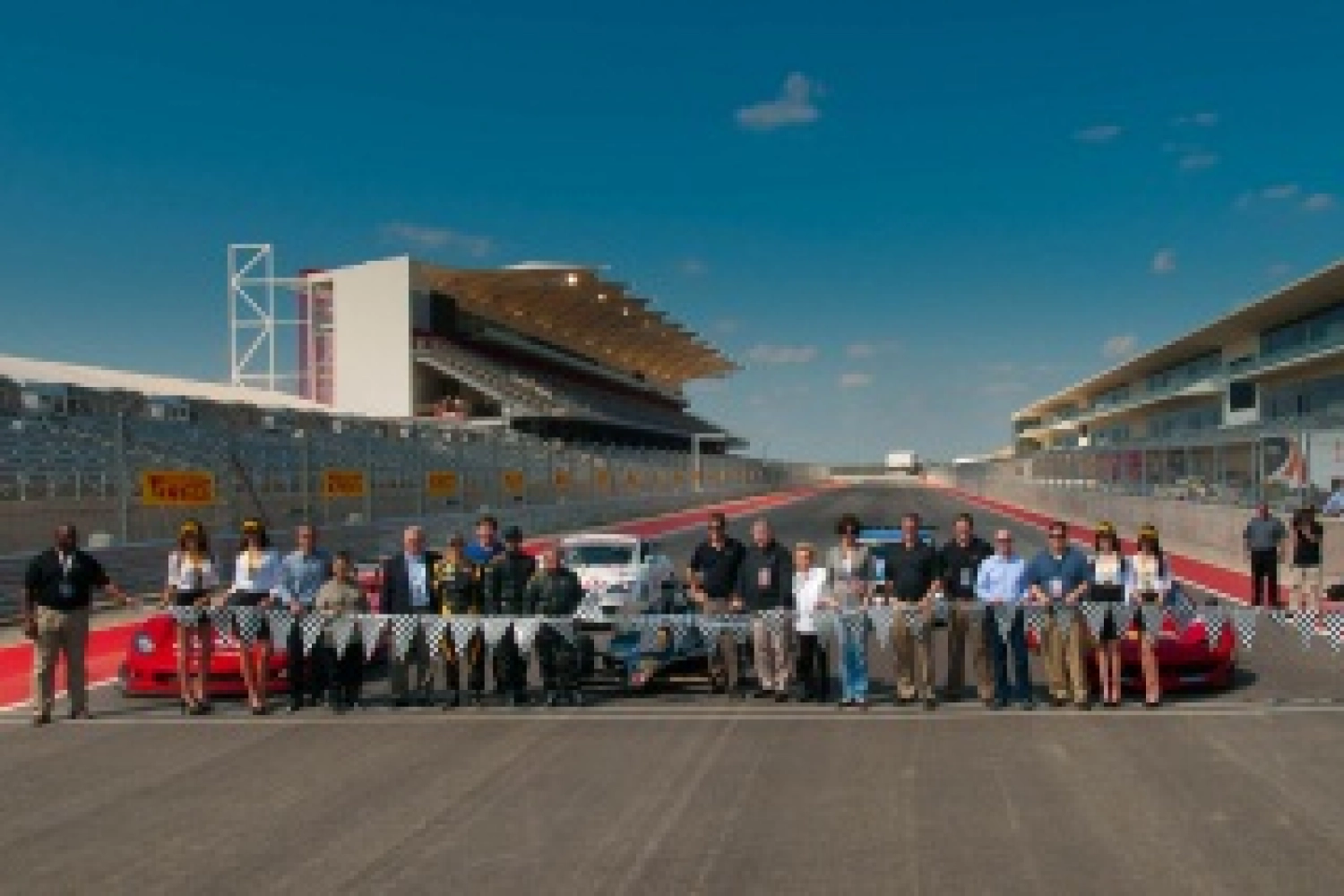
This weekend, Formula 1 returns to the land of Uncle Sam for the first time in 5 years. For this return to the United States, the drivers will discover a new circuit, the Circuit of the Americas, located in the suburbs of Austin, Texas. This track is the 10th to host a Formula 1 Grand Prix on U.S. soil.
The circuit being new for everyone, little information is available because the teams have only been able to do simulations. According to McLaren, the track should require aerodynamic downforce similar to that of Silverstone.
This race weekend, the penultimate of the season, will also be the stage for the battle between Sebastian Vettel and Fernando Alonso in their quest for a third Formula 1 World Championship title. The two men are only separated by 10 points, in favor of the German, and with a new circuit layout, it could change the game.
The FIA announced that only one DRS zone has been set up for the United States Grand Prix. It has been defined on the long straight of the circuit, located between turns 11 and 12. Activation should occur 650 meters from the braking point of turn number 12, while detection is expected to happen before turn number 11. The governing body also announced the name of the steward who will officiate in the United States: it is Emerson Fittipaldi, double Formula 1 world champion (in 1972 and 1974).
Austin chassis side
Giampaolo Dall’Ara, Head of Track Engineering at Sauber F1 Team:
Arriving at an unknown circuit always requires some preparatory work. Like all the other teams, we were provided with relevant data about the Circuit of the Americas. We have developed a simulation for the aerodynamic configuration of our car, for the gear ratios, the brake systems, and more broadly, for basic settings. A rather unknown factor will be the abrasiveness of the asphalt. Regarding this point, we rely on Pirelli and the tire allocation decided, which in this case is the provision of mediums and hards.
Unlike the circuits we are familiar with, you will probably see more running during the first session to check the settings and allow the drivers to learn the layout. The lap begins with an uphill straight leading into turn 1, followed by several fast corners. This section, I think, should suit our car well. After a tight left-hand corner, there is a long straight followed by several slow corners and a long right-hander with multiple apexes before returning to the start-finish straight.
Austin engine side
Rémi Taffin, Head of Track Operations at Renault Sport F1:
« Arriving at a new circuit always presents new challenges. We rely heavily on bench and computer simulations. The accuracy of these models is such that we can work on the gear ratios to be used in the race, the fuel consumption per lap, and the basic engine mapping. However, there are still adjustments to be made on site based on the curbs, the abrasiveness of the asphalt, and the undulation of the track.
The first sector begins with a slow hairpin that requires engine braking and good responsiveness at the exit. The following sequence shares the same characteristics as Maggots and Becketts at Silverstone or the Esses at Suzuka. This turn is blind. The driver therefore needs to ‘feel’ the curve and have confidence in their car. The next sector is a fantastic challenge for both drivers and engine engineers. The average speed in this sector will be around 210 km/h in fifth and sixth gears without the engine speed exceeding 15,000 RPM. Engine components will be subjected to significant lateral forces during rapid direction changes.
A large part of the second sector consists of a long straight line of over a kilometer. It’s one of the longest of the season and one of the easiest parts of the circuit. Sector 3 contains the most challenges. There are turns similar to two of the most tricky portions of the season: the Hockenheim stadium and Turn 8 of Istanbul! This will be one of the areas where we will have the most work to do upon arriving on site.
On a map, one cannot see the elevation changes of the circuit, which should be very close to India. These differences imply significant constraints on internal parts as liquids and lubricants rise and fall within the block according to the shape of the track. But we should be able to manage these parameters, as we already have extensive experience with this type of circuit with Spa and New Delhi.
Austin Tires Side
Paul Hembery’s opinion, Pirelli Motorsport director:
« Austin is one of the three new circuits for us in F1 this year, alongside Bahrain, where we had previously conducted tests, and Hockenheim, where we had already raced in GP3. America will be our biggest challenge of the year, but this step into the unknown is a situation we are accustomed to: last season, the majority of the circuits were completely unfamiliar to us.
We have chosen the hard and medium compounds and I think it will be quite a demanding track, based on the asphalt samples and simulation data. Naturally, we were inclined to choose a more conservative approach to cover all possibilities on a brand-new circuit, but the tire choices for Abu Dhabi were also conservative and we saw one of the most exciting races of the season.
We are absolutely delighted at the idea of returning to America with Formula 1: it is a crucial market for us, as well as the home of some of the most enthusiastic fans. We feel an immense excitement surrounding this race, and the championship is so close that it could not come at a better time.
The opinion of Jaime Alguersuari, Pirelli test driver:
« I know absolutely nothing about the Circuit of the Americas. I’ve only seen photographs and videos, but it seems to be a great circuit, very nice for driving. It’s clear that the teams now have a good understanding of Pirelli tires, and I would say that the hards and mediums are a fairly conservative choice, but this of course depends on many other factors like the macro-abrasiveness of the Austin surface. We are heading for a one-stop race, although circumstances could affect this prediction, such as safety cars or weather. A new circuit often shakes things up, and I’m sure it will be interesting. »
Austin in numbers
1:37 / 1:38: No team has actually driven on the Circuit of the Americas, but according to McLaren’s simulations, an average lap should be completed in 1 minute and 38 seconds, while Mercedes predicts a lap in 1 minute and 37 seconds during qualifying.
5: This is the maximum number of Gs drivers will experience during a lap in Austin.
10: The Circuit of the Americas is the 10th track to host a Formula 1 Grand Prix in the United States. It follows:
– Indianapolis – 8 United States Grand Prix between 2000 and 2007;
– Riverside – United States Grand Prix 1960;
– Sebring – United States Grand Prix 1959.
**20:** That is the number of turns on the Circuit of the Americas, with 11 to the left and 9 to the right.
70: This is the percentage of the lap spent at full throttle by the drivers according to simulations.
315: This is, in km/h, the maximum speed simulated by the McLaren team in Austin.
1000: This is the length, in meters, of the longest section that should be taken flat out.
[From the press releases published by the FIA, McLaren, Pirelli, Renault Sport F1, and Sauber F1]