Brazil: Figures and Technical Data
A brief overview of the technical constraints imposed by the Interlagos circuit located in Sao Paulo, Brazil on the chassis, engine, and tires of Formula 1 cars.

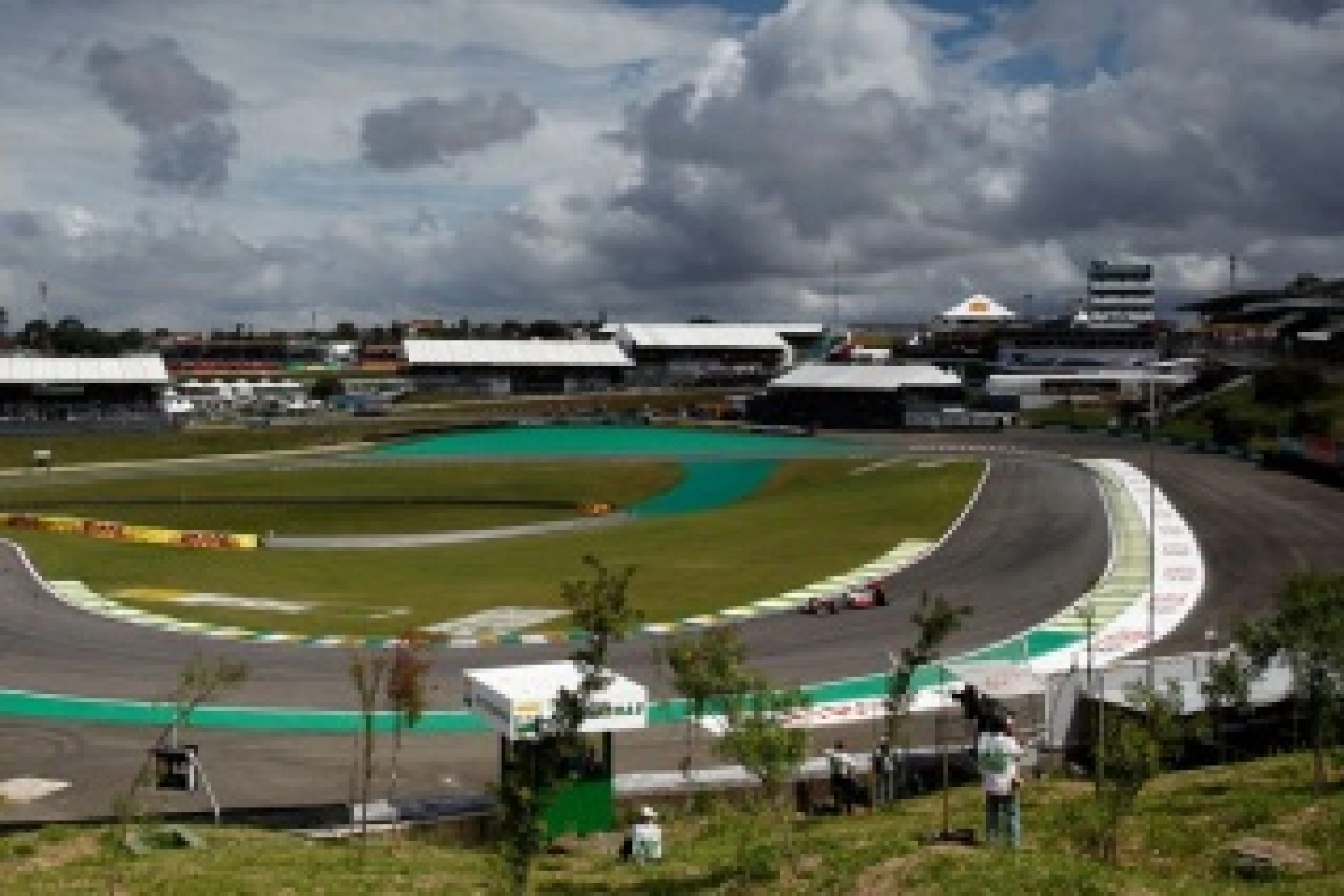
As last year, the Brazilian Grand Prix will close the Formula 1 season, but unlike in 2011, the race held at the Autodromo José Carlos Pace, better known as Interlagos, will determine whether Sebastian Vettel or Fernando Alonso will take the drivers’ world championship crown.
The Brazilian track is well known to the majority of drivers as it has been on the calendar, in its current form, since 1990. However, it remains a tricky circuit, especially when the weather, and more specifically the rain, gets involved. Interlagos features high-speed sections, with the first and third sectors, and a more twisting inner second sector, which will require teams to find the right balance between top speed and downforce for the different corners in this second sector.
This season, as in 2011, the FIA has decided to implement only one DRS zone on the Interlagos track. The detection will occur in the Senna esses, and activation will take place at the beginning of the straight line following this sequence. It should be noted that Tom Kristensen will serve as the driver steward for the final race of the year.
Interlagos chassis side
Giampaolo Dall’Ara, Head of Track Engineering at Sauber F1 Team:
« The Interlagos circuit presents numerous challenges for engineers and drivers alike. It’s a mix between two high-speed sectors, a fast combination at the end of a long straight line, and then the interior part where you need stability and grip. There are several slow turns as well, but also combinations where you have lateral and longitudinal acceleration. For these sections, the car needs good balance. The middle sector is very technical, but in the other two sectors, you need good speed. It will be crucial to find the right compromise between downforce and drag as well as aerodynamic efficiency.
As the weather is always a factor at Interlagos, you need to adapt the downforce level to these conditions. There’s a lot of work to do to test different configurations for the drivers and the engineers. Pirelli will again bring the mediums and the softs, which shouldn’t be a problem since the track is more abrasive than Austin’s. However, if the track is wet, it could be tricky.
Interlagos engine side
Rémi Taffin, Head of Track Operations at Renault Sport F1:
« The Interlagos circuit requires all the characteristics of a good engine. We are working very hard on its flexibility to best handle the winding return section. The second sector, particularly turns 8, 9, and 10, demands a very flexible engine to avoid sliding when exiting the curve. This is particularly important this weekend, as we expect to drive on a wet track.
The entire fast section from turn 12 to the Senna S, passing in front of the stands, requires good acceleration. The altitude increases by nearly 40 meters at this point, so the engines are pushed to their limit.
The main characteristic of this circuit is the altitude. The RS27 can lose up to 8% of its power compared to use at sea level. We often choose engines that already have many kilometers, as pure power is not as crucial as it is on another track.
There are also advantages to driving at altitude. Fuel consumption is much lower than at sea level and drag is significantly reduced because there is less air to go through. Visually, the single-seaters seem to carry a lot of downforce, but what is generated “aerodynamically” is equivalent to medium settings.
This is not an easy circuit to end the season, as there are many challenges to overcome. But we feel ready and we are well-prepared.
Interlagos from the tire side
The opinion of Paul Hembery, director of Pirelli Motorsport:
We are bringing some of our 2013 tire prototypes to Brazil to give the teams a preview during the free practice sessions. With no testing until February, this will be a very important opportunity for them to see how our tires perform before finalizing the 2013 cars. Let’s hope it doesn’t rain on Friday!
The mixes, like the construction of the tires, will be different, which means the characteristics of the new tires will also be different. They will allow us to work within a broader window and with slightly more aggressive compounds. We still need to precisely finalize where each compound will be positioned relative to the others in the range, which is why we call the tire brought to Brazil a “prototype,” rather than giving it a specific name. However, it will be very representative of our general design philosophy for the coming year.
We look forward to receiving the technical feedback from the teams on this matter and will of course send our 2012 tires to the Brazilian race, which is usually a very demanding and thrilling event, followed by the most passionate and warm-hearted fans in the world.
Opinion of Lucas di Grassi, Pirelli test driver:
« Interlagos is the place where I started my karting career, and it is one of my favorite circuits, with a bit of everything, lots of elevation changes, and a good rhythm. I believe the track offers the highest altitude on the F1 calendar, at 700m, which has a significant impact on downforce and engine power.
From a pneumatic point of view, the hard and medium tires should be a good choice. Although the surface is very hard, Interlagos is not too harsh on the tires: the turns are not that fast and do not impose as many constraints as at Suzuka, for example. We have also chosen slightly more conservative tires here. The medium will be the fastest compound and will probably be the best for qualifying.
I expect to see one or two-stop strategies this time. The unpredictability factor concerns the threat of rain, which could make the race even more interesting with the championship wide open.
Interlagos in numbers
1:11.473: This is the lap record for the Interlagos circuit, set by Juan-Pablo Montoya driving his Williams FW26 in 2004.
2: This is the maximum number of victories recorded by a Brazilian driver at the Brazilian Grand Prix. Four have achieved this feat: Emerson Fittipaldi in 1973 and 1974, Nelson Piquet in 1983 and 1986, Ayrton Senna in 1991 and 1993, and Felipe Massa in 2006 and 2008. If he wins this weekend, the Ferrari driver could become the most successful Brazilian at home in Formula 1.
3: Red Bull Racing has three consecutive victories at Interlagos, with Webber in 2011 and 2009, and Vettel in 2010. The Austrian team also has two consecutive one-two finishes, in 2010 and 2011. Three is also the number of pit stops made by Mark Webber last year during his victory.
5: It is, in G, the highest force to which drivers are subjected in Brazil.
6: This is the number of victories secured by the most prolific driver at the Brazilian Grand Prix, the Frenchman Alain Prost, winner in 1982, 1984, 1985, 1987, 1988, and 1990.
15.9: This is, in seconds, the duration of the longest full-throttle stretch on the Brazilian circuit, representing 1200 meters, which corresponds to the long full throttle leading to the start and finish line.
62: This is the percentage of the Autodromo José Carlos Pace lap spent at full throttle by the drivers.
**210:** This is the average speed in km/h during a lap in Brazil.
320: This is the maximum speed that drivers should be able to reach on the Interlagos track.
[From press releases published by the FIA, McLaren, Pirelli, Renault Sport F1 and Sauber F1]