China: Figures and Technical Data
Overview of the technical constraints imposed by the Shanghai circuit in China on the chassis, engine, and tires of Formula 1 cars.

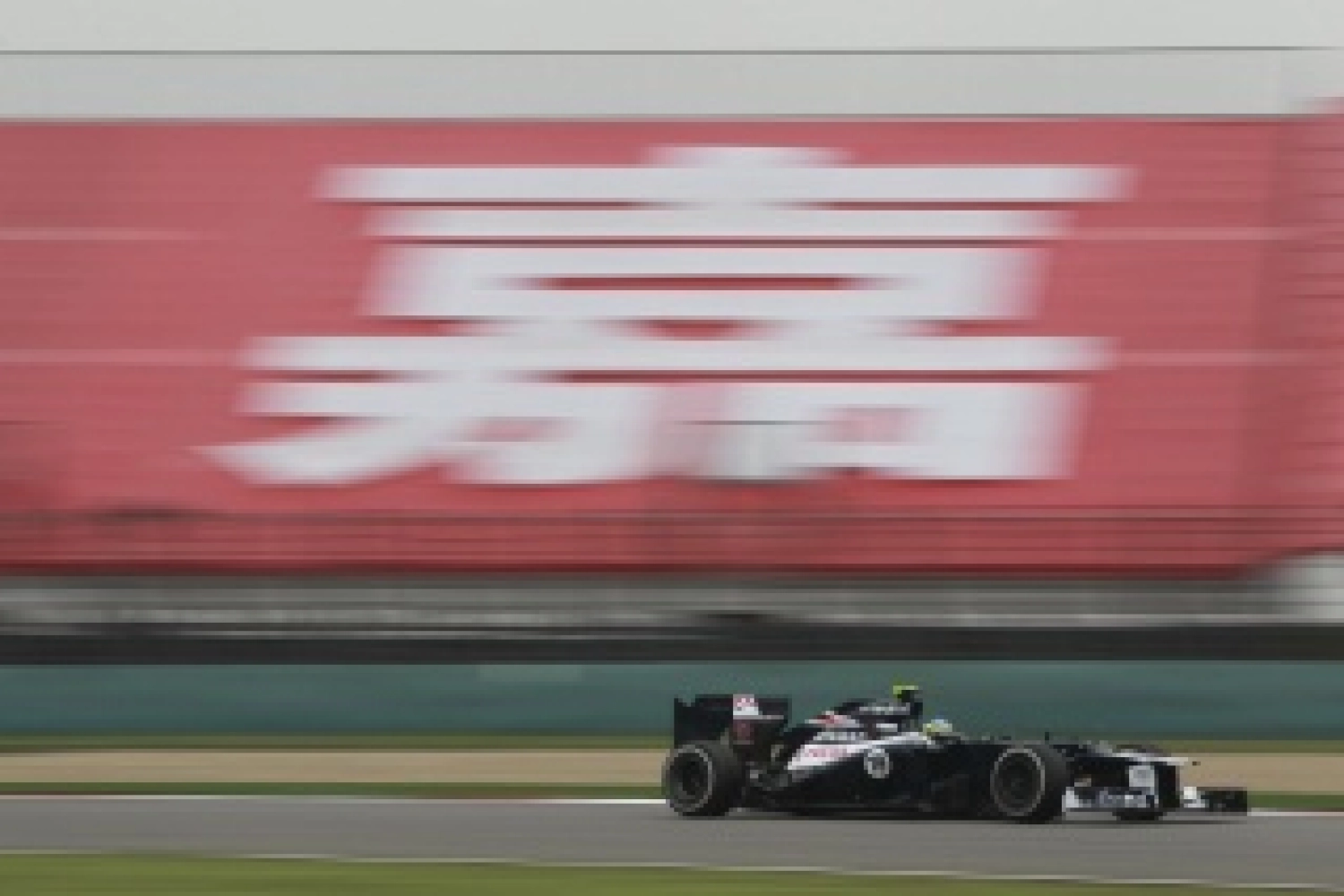
For the third race of the 2013 Formula 1 season, the teams head to the land of the rising sun, in China on the Shanghai International Circuit. The Chinese track is quite a technical circuit and also has one of the longest straights of the season, so the teams and drivers will need to find the best compromise between good aerodynamic downforce for the technical sectors and good top speed for the two straights.
Even though it’s a circuit that offers overtaking opportunities – with notably two DRS zones, it’s better to start in the top 10 to aim for a podium in Shanghai. Indeed, only one driver has managed to finish on the podium after starting beyond the 10th place on the grid: Mark Webber, who started from the 18th position on the grid in 2011.
On the statistics side, during the nine editions already contested, eight different drivers have won – Barrichello, Alonso, Schumacher, Räikkönen, Hamilton, Vettel, Button, and Rosberg – only Lewis Hamilton has managed to win twice, in 2007 and 2011.
Weather-wise, it shouldn’t rain and the temperatures shouldn’t be too cold, but the tires could be one of the keys to the Grand Prix, as in the first two races this year and as last year during Nico Rosberg’s victory.
Shanghai Chassis Side
Tom McCullough, Track Engineering Manager at Sauber F1 Team:
« The Shanghai circuit has a good diversity of corners taken at slow, medium, and fast speeds. The circuit has several technical sections where the corners flow into one another, requiring a good balance and precise driving. The asphalt and low track temperatures have a significant impact on tire performance—particularly at the beginning of the race weekend as the track rubbers in. Pirelli has brought the soft and medium compounds, marking the first time this season that these two tires are paired. »
Shanghai engine side
Rémi Taffin, Track Performance Director of Renault Sport F1:
« Shanghai is a unique race in the calendar. There is a very long straight, but we spend relatively little time at full throttle. This dichotomy is unusual compared to other circuits whose layout characteristics are more pronounced: we are dealing either with ‘full power’ circuits like Monza or Montreal, or with tracks where the general behavior of the cars prevails, like the Hungaroring or Monaco.
As a result, we need to provide the best support across the entire range of use. Engine braking is essential for stabilizing the rear end in corners. We believe it will be even more important this year due to the high grip level of the tire range. Similarly, the response time out of curves is important for having a good speed at the end of straights, particularly at the end of the longest one. Let’s not forget the importance of KERS in Shanghai: braking before turn 14 is one of the main overtaking opportunities.
The location of the circuit brings another unusual constraint. Situated in the industrial area adjacent to the track, the concrete factories release a lot of dust into the atmosphere. Our air filters must be checked and cleaned after each session to avoid losing power.
Moreover, the atmospheric conditions in Shanghai complicate the preparation for this race. The ambient temperature can vary significantly; we have experienced a range of +/- 10°C over the past six years. The temperature can also change over the weekend. In 2012, we had up to a 5°C difference. When it’s cooler, the engine power is higher, but the fuel consumption per lap also increases. Therefore, engine manufacturers will need to consider all these parameters and maintain a safety margin throughout the weekend.
Shanghai and Tires
The tires available for the drivers in Shanghai are as follows:
- Soft (yellow sides) ;
- Medium (white sides) ;
- Intermediate (green sides) ;
- Rain (blue sides).
The opinion of Paul Hembery, director of Pirelli Motorsport:
« China often offers one of the best races of the year, with strategy as the star of the action. With a softer range of compounds this season, degradation is deliberately more extreme to encourage performance, but history has shown that it never takes long for teams and drivers to understand the tires.
Shanghai circuit is less aggressive on tires than the one in Malaysia where the last championship round took place, but we expect to see the majority of drivers stopping three times, though some might attempt two pit stops. Last year, we saw a new winner with Nico Rosberg and Mercedes, who were able to make the most of their tires from the start of the weekend, creating a surprise. This shows exactly what is possible with good tire management at this stage of the season.
Jean Alesi’s opinion, Pirelli ambassador:
China is a circuit that is not very typical of the others, once again. Although I have never raced there, it seems to be a superb track. From a tire perspective, drivers will need to find the best compromise between performance and degradation, which is exactly what Formula 1 has always been about.
I have raced with numerous tire regulations and suppliers throughout my career – even during the era of qualifying tires – and while each offered different aspects, Pirelli is the company that has provided the most entertainment for the fans: so far, we have witnessed two fantastic races. This is exactly what was required and from my point of view, this is what the sport needed. One of the things that doesn’t change is that all the best teams will always be the most victorious. Therefore, there is no reason for anyone to complain because it will always be the case, regardless of the regulations.
Shanghai in Numbers
| Length of the Shanghai circuit | 5.451 km |
| Number of turns | 16 (9 right and 7 left) |
| Average speed | 193 km/h |
| Top speed | 321 km/h |
| % of a lap at full power | 49 |
| Fuel consumption | 2.45 liters per lap; 64 l/100km |
| Lap record | 1:32.238 (Michael Schumacher, Ferrari, 2004) |
The 2012 Chinese Grand Prix
Pole position.
Nico Rosberg (Mercedes) in 1:35.121
Podium:
1 – Nico Rosberg (Mercedes)
2 – Jenson Button (McLaren)
3 – Lewis Hamilton (McLaren)
Fastest lap in the race:
Kamui Kobayashi (Sauber) in 1:39.960
[From the press releases issued by FIA, Pirelli, Renault Sport F1, and Sauber F1]