Silverstone: Figures and Technical Data
Overview of the technical constraints imposed by the Silverstone circuit on the chassis, engine, and tires of Formula 1 cars.

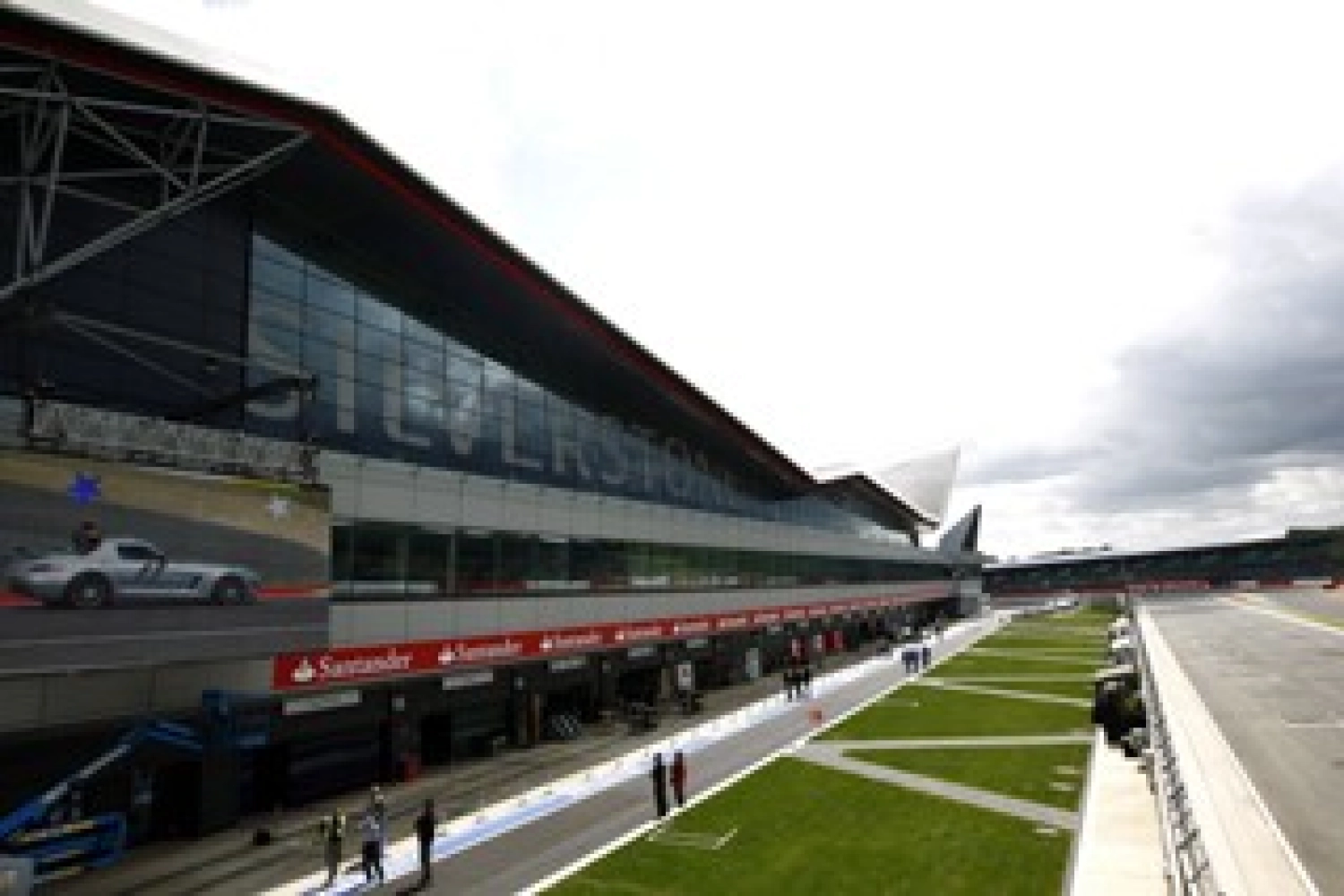
This weekend, Formula 1 will witness one of its legendary Grand Prix events, the British Grand Prix, the 64th since the creation of the Formula 1 World Championship in 1950. It will be held for the 47th time on the Silverstone track – with Aintree and Brands Hatch being the two other circuits that have hosted this event.
The team that has been the most successful on the British circuit is Scuderia Ferrari, which has won 16 races at Silverstone, including its first in 1951, thanks to José Froilan Gonzalez, who passed away on June 15.
The British are not to be outdone at home because behind Ferrari, we find McLaren – celebrating its 50th anniversary this year – with 14 victories and Williams – celebrating its 600th Grand Prix – with 10 victories. On the drivers’ side, 12 British drivers have won (for a total of 22 victories), the most recent being Lewis Hamilton, who won in 2008 driving a McLaren.
The Silverstone circuit is a track that combines fast corners with short straights where overtaking is not always easy, but to address the issue, the FIA has decided to implement two DRS zones for this weekend, with two detection points. As for the FIA, they have appointed Nigel Mansell – four-time winner of the British Grand Prix – as the 4th steward.
On the weather side, rain is expected tomorrow, Friday, for the first free practice sessions, while the following two days should take place under a milder sky.
Silverstone chassis side
Tom McCullough, Head of Track Engineering of the Sauber F1 Team:
« Silverstone is one of the most demanding circuits, with mostly fast corners and short straights compared to more modern tracks. The layout favors high-speed stability and good direction-changing capability, while the demand on the brakes is low. The circuit is also quite bumpy in several places so grip is also important.
The abrasive asphalt and the nature of this high-speed circuit make it tough on the tires. Consequently, Pirelli has brought the two hardest compounds in its range – the mediums and the hards. Historically, overtaking has never been easy, but this year there is an extra DRS zone on the Hangar straight, which should help create more opportunities. The weather often plays a significant role during this weekend, so it must be constantly monitored.
Silverstone Engine Side
Rémi Taffin, Track Operations Director of Renault Sport F1:
Even with the new winding loop, Silverstone remains one of the biggest challenges of the season for the engine, with 60% of the lap spent at full throttle and an average speed well above 200 km/h. The numerous high-speed corners are as many challenges for the RS27, particularly the Maggots-Becketts-Chapel complex where the average speed is 250 km/h without ever dropping below 190 km/h. These speeds combined with direction changes generate enormous lateral forces in the car: the oil and fuel systems must be robust enough when fluids are thrown from side to side. Special attention is paid to the oil circuit and the fuel collector, especially at the end of the race.
With four straights, we also work a lot to have the right gear ratios at high revs in order to have the best acceleration and exploit all the power. The Hangar straight is the longest at 875 meters with a maximum speed of 310 km/h. It’s important to reach this speed just before the Stowe braking area, a right-hand corner in fourth gear. The very famous British weather can impact gear selection, particularly because the wind can quickly change direction. This means we may spend more or less time on the limiter.
We talk a lot about fast corners, but we also need to focus on the winding sections, like Club or The Loop, which reduce average speed and demand a good low-end response. As often, compromises need to be made, but we can take advantage of the RS27’s flexibility on this type of circuit.
Our four partner teams being based in Great Britain, this Grand Prix gives us the feeling of competing at home. In this regard, we will give our best so that everyone can reach their potential in front of their home crowd.
Silverstone from the tire aspect
The available tires for drivers at Silverstone are as follows:
- Mediums (white sidewalls) ;
- Hards (orange sidewalls) ;
- Intermediates (green sidewalls) ;
- Rain (blue sidewalls).
The opinion of Paul Hembery, director of Pirelli Motorsport:
« Silverstone, with its very high average speed and series of flowing corners, presents a stark contrast to Canada, three weeks ago, which is more of a braking and acceleration circuit. Like in Canada, it is a demanding circuit on the tires, for very different reasons. We are bringing the two hardest compounds to the British GP for this reason, with a new bonding process between the steel belt and the structure, to eliminate the isolated delamination issues observed in some previous Grand Prix.
The current construction of the tire will not change as the teams have not reached a unanimous agreement on the matter. However, we can still offer this possibility to the teams later in the season, if they request it. During the free practice sessions at Silverstone, we will have the same hard tire prototype as seen earlier in the season. These tires, similar to those used on Friday in Spain, aim for greater durability than our current hard tires. The goal is to give the teams the chance to test this new compound on different circuits to collect more data.
Of course, another important factor at Silverstone is the well-known variable of changing weather! It wouldn’t be surprising to see intermediates (Green Cinturato) and wets (Blue Cinturato) play a role at some point. As a result, it is quite difficult to predict the number of pit stops during the race. Last year, we saw a two-stop strategy on dry conditions after two days of rain. But this year, the compounds are softer, and if the weather stays dry, we could see three to four stops. We should be able to make more accurate forecasts after the free practice sessions.
Finally, and more importantly, we would like to extend our sincere condolences to the family and friends of Allan Simonsen following the terrible accident at Le Mans last weekend. We were partners with Aston Martin Racing for many years and can only imagine what they are going through at the moment.
The opinion of Jean Alesi, Pirelli ambassador:
« The real factor to systematically observe at Silverstone is the weather: absolutely anything can happen, and the conditions are often both dry and wet. You need to watch where you step. It’s a demanding circuit for the tires; not so much because of the traction and braking, but due to the significant levels of downforce that keep the car glued to the track at very high speeds. This is what causes wear at Silverstone, making hard and medium tires a good choice. As a driver, I have made it to the podium several times at Silverstone and have always enjoyed it, in various configurations.
The latest change, with the complex of the stands, is a very impressive investment, but in my opinion, it’s a shame to have removed the Bridge corner: it was a fantastic challenge. Nonetheless, Silverstone will always be a true driver’s circuit, and I think we can expect a good race, less politics, and interesting strategies. It’s always a pleasure to come here because the British fans are so knowledgeable and passionate about F1! There is a real motorsport culture in Great Britain, and I think everyone appreciates that.
Silverstone in Numbers
| Length of the Silverstone circuit | 5.891 km |
| Number of turns | 18 (10 right and 8 left) |
| Average speed | 217 km/h |
| Top speed | 309 km/h |
| % of a lap at full throttle | 61 |
| Fuel consumption | 2.55 liters per lap; 62 l/100km |
| Lap record | 1:34.661 (Kimi Räikkönen, Lotus, 2012) |
The 2012 British Grand Prix
Pole position:
Fernando Alonso (Ferrari) in 1:51.746
Podium:
1 – Mark Webber (Red Bull)
2 – Fernando Alonso (Ferrari)
3 – Sebastian Vettel (Red Bull)
Fastest lap in the race:
Kimi Räikkönen (Lotus) in 1:34.661
[Based on press releases published by the FIA, Pirelli, Renault Sport F1 and Sauber F1]