Nigel Mansell finds the minimum weight for 2014 “shameful”
In 2014, the weight of the drivers will be an even greater "size" issue for the teams, particularly in the design and development of single-seaters, for whom every thousandth of a second will matter. The state of the regulations poses difficulties and raises concerns. A situation that Nigel Mansell criticizes sharply.

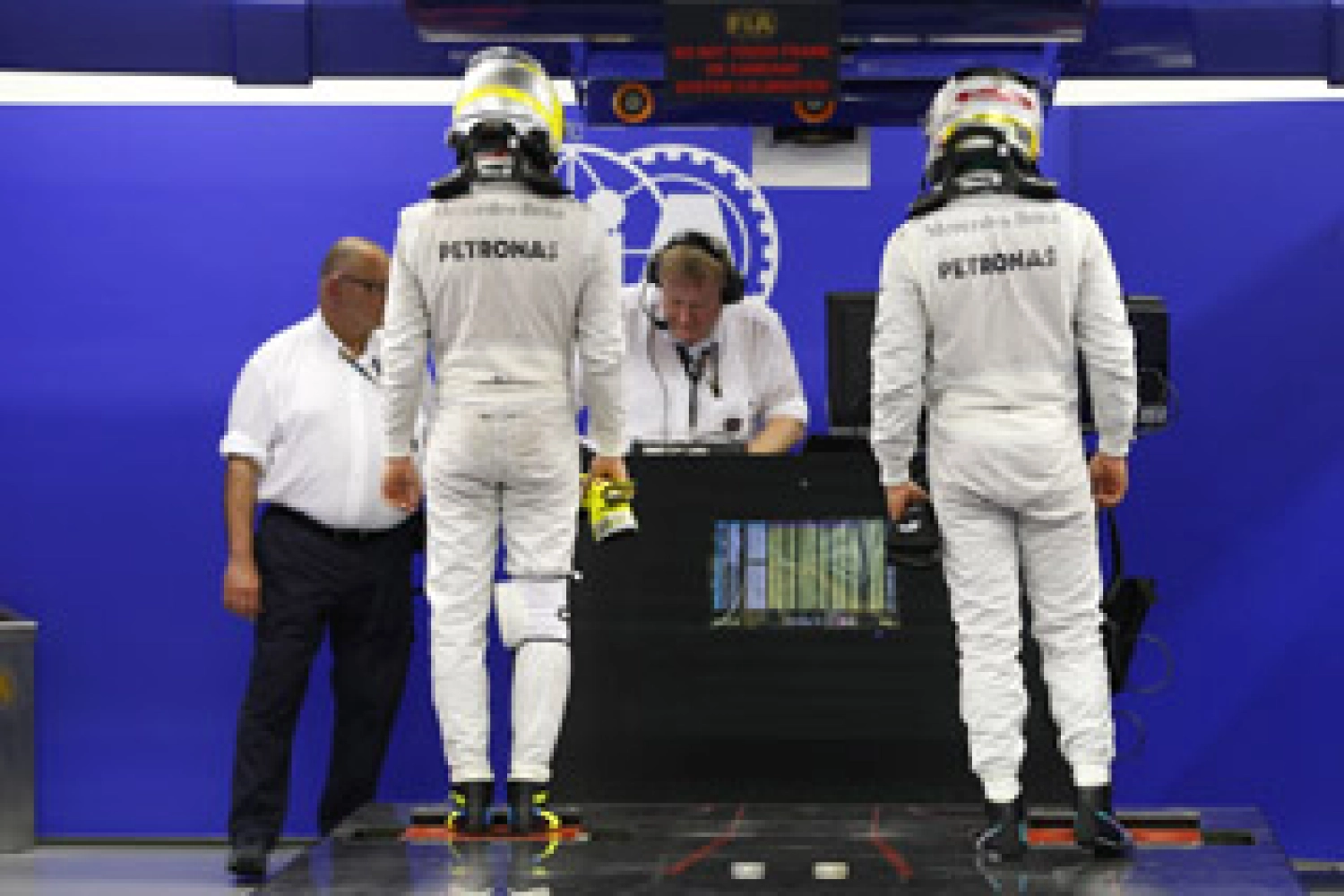
The 2014 season will mark a turning point in Formula 1 with the return of turbo V6 engines, replacing the current naturally aspirated V8s. The technical regulations, to prepare for this significant change, had to adjust the minimum weight requirement for the cars: it will increase from 642kg to 690kg. However, it appears that the total weight of the engine block exceeds initial estimates. This situation could potentially impact some drivers.
Since the Korean Grand Prix, notably, the controversy has been growing. Andrew Benson, head of the F1 department at the BBC, lays the groundwork of the issue: “It poses a problem because 1kg more is equivalent to about 0.035 seconds per lap on an average circuit. This means a small driver like Fernando Alonso, who weighs 68kg, has an advantage over a taller driver like Nico Hülkenberg, who weighs 74kg, of around 0.2 seconds per lap if the team can’t reduce the car’s weight by that difference,” he explains, before adding: “And even if they can, the taller driver has a disadvantage because his position in the car is high, which also affects his performance.”
A discriminatory situation for Nigel Mansell, 1992 world champion and keen observer of Formula 1: “It’s shameful. It’s discrimination against drivers of average build,” he says in an interview with the BBC. “Years ago, we didn’t have traction control or power steering. You had to be a strong driver, and there were many strong drivers. If this limitation had existed back then, they wouldn’t have been able to drive the cars from a few years ago or they would have done so with great difficulty.”
For him, the solution is clear: « I think [we need] to slightly raise the limit, place weights in some cars so taller drivers won’t suffer as much. It’s wrong. They’re not jockeys. » The reference to athletes riding racehorses is not unfounded, as horses are often weighted based on their performances, and weight plays an essential role in hoping to perform well. In other disciplines like ski jumping, many controversies have erupted and numerous measures have been taken to limit the drastic diets imposed on jumpers – bordering on anorexia – all to improve their lift against the wind.
For now, Formula 1 seems far from launching an anti-anorexia plan, but some drivers have already explained that they struggle the most to meet the current limits. Jenson Button, for example, does not hide his concern: “I weigh 74-75kg with my equipment, and I have difficulty getting down to the minimum weight. I’ve been doing it for three years. I love fitness, but there are things I can’t do because I have to maintain a fixed weight, not eat carbs, not gain muscle. And next year, it will be worse. I don’t think any team will have ballast.”
The discontent is rising, but for now, no changes are being considered. While Martin Whitmarsh, the director of McLaren, stated that the desire to increase the allowed limit is justified, he also explained that F1 doesn’t work that way. Individual interests will prevail. Teams that think it’s okay will block any change. The requirement for a unanimous decision makes it complicated to modify the technical regulations, especially when some teams can imagine gaining an advantage or giving certain teams a disadvantage.
For Mark Webber, who will leave the discipline at the end of the season, it’s fatalism that prevails: « There’s nothing new. Especially since the arrival of KERS, it’s a challenge for heavy guys. Everyone asks me why I seem so skinny, but you have to be skinny because it’s to your advantage to be as light as possible. » The Australian adds: « People say that mass distribution is fixed, but there’s always 1%, which is a significant number, that you can move and place the ballast where you want. It’s not an advantage to be the size of Nico [Hülkenberg, note] or my size, it doesn’t help. But that’s how it is, you have to do your best with what you have. […] We asked [for this to change] a few years ago, but they said no. Lightweight drivers should go this way too, but obviously, they don’t. »
The name Nico Hülkenberg often comes up when discussing this issue, the drawback for the Sauber driver is indeed his height, which, according to Andrew Benson, may have significantly worked against him with McLaren.