2014: from platypus noses to hummingbird beaks?
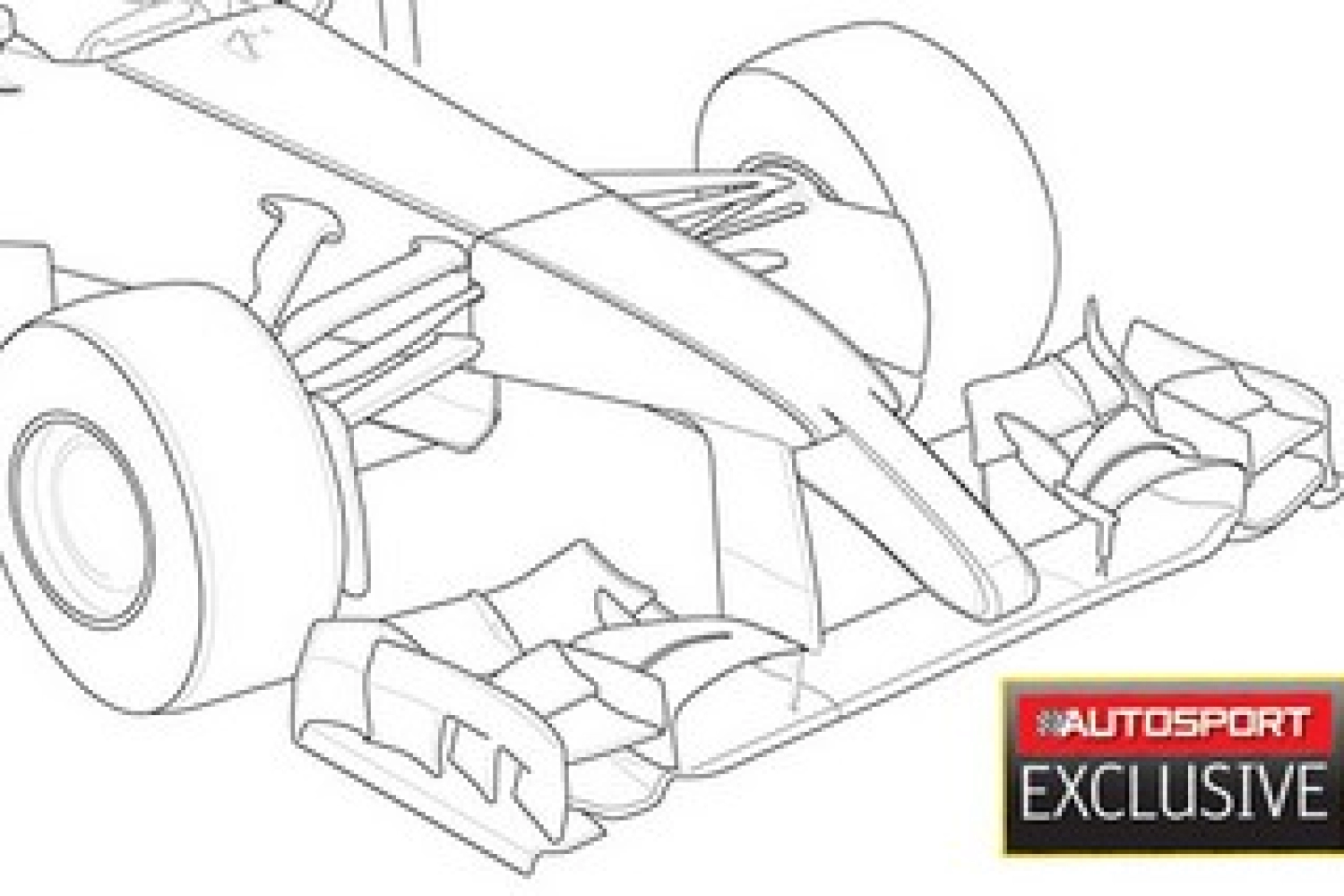
According to the first sketches made by Autosport, the noses of Formula 1 cars in 2014 could still be talked about for aesthetic reasons, with the bumps likely giving way to drooping protrusions.

Since the important regulatory changes that took place in 2009, the general appearance of Formula 1 cars has been greatly modified: wider front wings in the form of « cake shovels », narrower rear wings, abandonment of most of the appendages that were still flourishing in 2008, but most notably, the emblematic bumps that appeared on the front of F1 cars from 2012, which some have affectionately dubbed « platypus noses ».
The general public and most of the F1 circus participants have often criticized, sometimes quite harshly, these changes in appearance, believing that, overall, the premier discipline was regressing aesthetically. This concern eventually had regulatory repercussions, with authorities allowing the placement of covers in early 2013 to hide this unsightly bulge.
The 2014 Formula 1 season could, it seems, offer new material for criticism. Adrian Newey had already explained a few weeks ago, while visiting Milton Keynes to work on the future RB10, that the next generation of cars would be hideous. Without a real benchmark, it’s hard to understand how.
The British site Autosport, and more specifically Craig Scarborough, an F1 journalist specializing in technical matters, have highlighted the front end of a single-seater that would comply with the 2014 regulations. The platypus nose would therefore give way to a hummingbird or penguin beak, depending on one’s animal sensibility, consisting of a notched and hooked part that would extend the nose of the F1 cars.
Such a system aims to make the most of the rules that will come into force next year: a chassis that must be quite high (525mm maximum) and a nose of the car that is quite low (185mm maximum). When applied scrupulously, they prevent teams from maintaining a large volume of air under the nose of the car, which tends to improve the efficiency of the floor and the diffuser. This is why teams would achieve the image produced by Autosport, showing an upper section close to the standards of the discipline – which will have to withstand FIA crash tests – extended by a thin, drooping lower section that would allow compliance with regulations and satisfy the teams.
As is often the case, if several solutions are possible, it seems according to Craig Scarborough that this one is currently considered – and while most teams are in a very advanced stage of development – as the most effective. Aesthetic concerns and intentions for change have reportedly been raised with the governing bodies of the discipline but, in the absence of an agreement, a regulatory modification is unthinkable. The FIA has even issued a directive excluding an alternative solution for the nose of the cars.
Sam Michael, sporting director of McLaren, admitted that the deformable structure was ugly, adding: “The low nose isn’t a problem. The problem is the variables in the way you pass the crash tests, and the teams will mainly come up with a solution.”