Allison glimpses a “new Ferrari era”
When interviewed on the official Scuderia Ferrari website, James Allison, a defector from Lotus F1, believes that the Italian team, thanks in part to his work, is on track for new successes, driven by the rebalancing of forces implied by the new technical regulations.

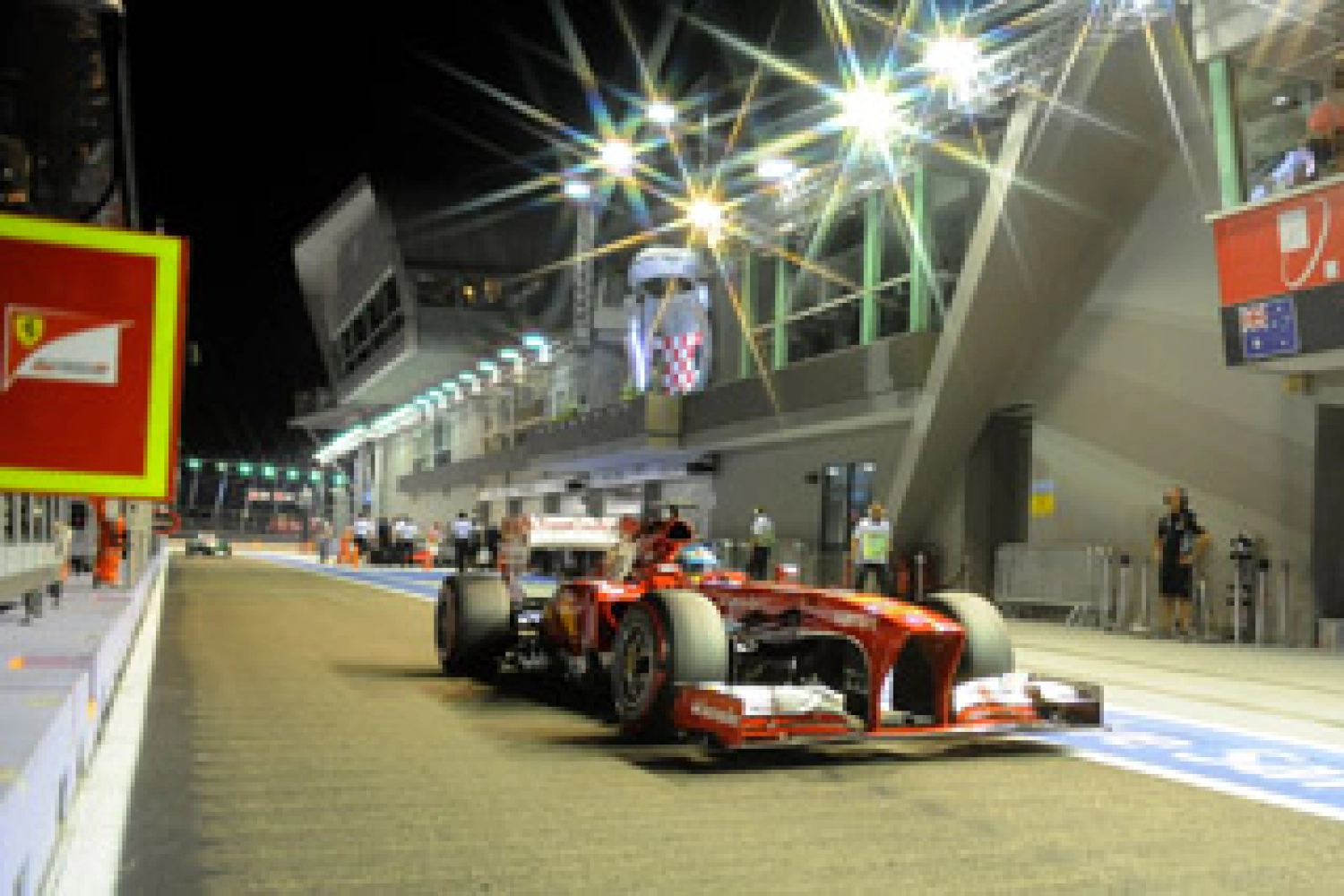
The 2014 season will be one of high expectations for Ferrari: after five seasons without a single title (the most recent being the constructors’ title in 2008), the Scuderia hopes to take advantage of regulatory changes to return to the forefront, which has been dominated by Red Bull and Sebastian Vettel for four consecutive seasons, leaving little for their competitors. Among the reasons for hope is the arrival of James Allison from Lotus as the chassis technical director.
Arriving in September, the British technician mainly focused on the management of human and technical resources: “I really haven’t spent much time going into the details of the new car’s design, as it wouldn’t make any sense at this point. In truth, I focused on aligning resources and placing the best people in the right positions to optimize attention to detail,” he stated on Ferrari’s official website.
The design work had already been completed upstream and Allison had to fit into the continuity of this work. In fact, when you approach a regulatory change like this, it’s not something you start thinking about 6 months in advance. When I arrived in Maranello, the work on the project had been underway for two years. I tried to align myself with its philosophy and adapt to the team as quickly as possible. That being said, what you might consider my active role in the car design involves working to identify the areas where we might push harder and concentrate more efforts.
The balance of the elements that will make up a single-seater in 2014 will be altered: It is true that the influence of the power unit (or hybrid engine, editor’s note) on the overall performance of the car will be more significant than in the recent past. From the moment engine development was frozen in 2007 and performance levels converged, it was clear that its influence on the hierarchy would diminish, while aerodynamics would become more important.
« In the years leading up to this moment, it wasn’t the case: I remember well the importance of the engine in Ferrari’s successes in the first half of the 2000s. » A period that James Allison knew very well, being part of the Maranello team staff between 2000 and 2004.
The most important thing for him was to prepare the Scuderia to make its return among the benchmarks, particularly in terms of aerodynamics: « Today, we will observe a rebalancing, even if aerodynamic performance will always be a key factor. Aerodynamics remain the lifeblood of a modern F1 car. It’s impossible to be competitive without having the right tools and adequate resources: now, we can say that we have moved from being perhaps the fourth or fifth team in terms of tools to now being at the forefront, and everything is in place for a new Ferrari era to begin. » As a reminder, for several seasons, the Italian team struggled to use its wind tunnel effectively, due to errors and approximations in the reported values.