Lotus E22: a nose and horns that make people talk
Lotus surprised the small world of F1 by presenting a rendering of its single-seater with a different solution implemented at the front. Here are some explanations.

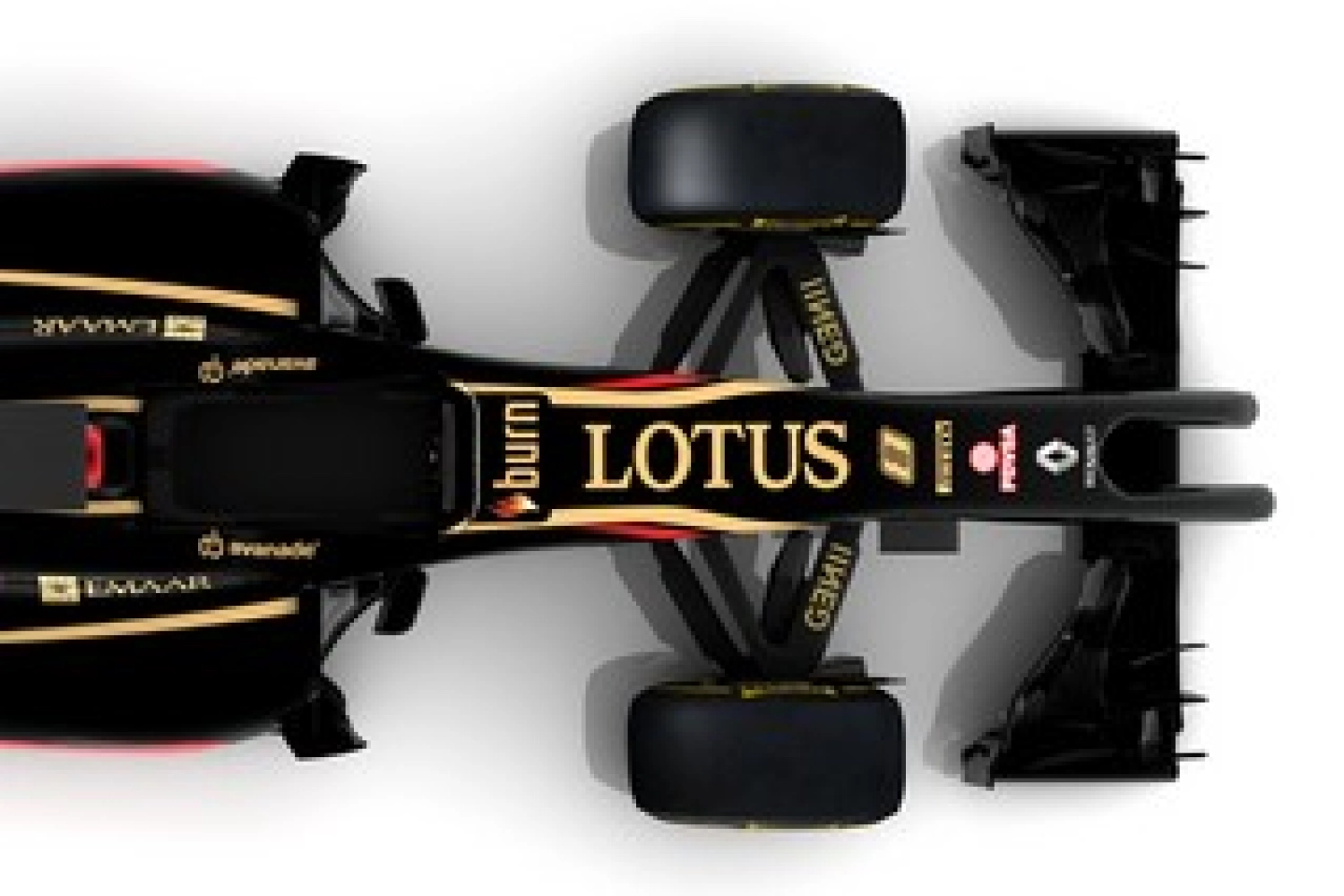
The flurry of car presentations for the Formula 1 season is in full swing since Wednesday. Indeed, five cars have already been unveiled to the small world of Formula 1: the Force India VJM07, the Williams FW36, the McLaren MP4-29, the Lotus E22, and most recently, the Ferrari F14-T.
As expected, the front of the cars for the upcoming season represents one of the major changes in terms of overall appearance, and these initial launches have confirmed that nose protrusions will certainly be the norm, due to technical regulations favoring this type of solution. However, among the different configurations adopted, the front of the Lotus E22 raises many questions.
The two images of the 3D rendering of the single-seater revealed that the two horns of the E22 were not the same size, with the right one exceeding the left. Questions about such asymmetry quickly arose among observers and Formula 1 fans. However, this oddity is explained very simply and shows that the Enstone team hasn’t lost any of its audacity in interpreting the regulations.
In reality, as Craig Scarborough, technical expert and columnist for Autosport, has pointed out, many teams might have considered implementing a similar dual-point system. However, the technical regulations (article 15.4.3, paragraph 3) prohibit the nose from being composed of multiple disjointed surfaces 5cm behind its tip.
This tip had to be lowered even further than in 2013 (from 525mm to 185mm). This requirement, combined with the lowering of the front face of the monocoque (from 625mm to 525mm), significantly reduced the amount of air flowing under the car to the floor, thereby decreasing the aerodynamic downforce generated by the underbody and diffuser.
The choice made by Lotus was to create a central opening « in the nose » by splitting it into two tips to allow the maximum amount of air possible to pass under the car. These two tips, in order not to violate the technical regulations, are not of the same length, so that the longer of the two (on the right) is considered the regulatory nose tip (thus respecting the required minimum and non-disjointed surface of 90cm²) while the shorter one cannot be considered a second nose tip since it is more than 5cm behind the end of the first tip. This shorter tip is a “simple” part of the deformable structure in case of an accident; such a configuration seems to have been the cause of Lotus’s difficulties with the crash tests, leading to delays in the launch of the E22.
The interest of such a solution doesn’t stop there, as the entire front wing and nose are designed to enhance airflow: the pillars connecting the two tips and the front mustache act as deflectors that channel the airflow, redistributing it more evenly and less erratically on either side of the Lotus E22’s bodywork. Compared to the single-tip nose of Williams or McLaren, this solution increases the frontal area, but it allows for a more intriguing redirection of airflow towards the rear, which could prove crucial.
With the kind participation of Gusgus