Wolff: Rosberg and Hamilton don’t care about the team’s interests
In a long interview, Toto Wolff, the executive director of Mercedes AMG F1, reflected on the Canadian Grand Prix as well as the relationship between Nico Rosberg and Lewis Hamilton with each other and with the team. It was an opportunity for him to assert that the two men are just colleagues and are primarily focused on winning the drivers' title.

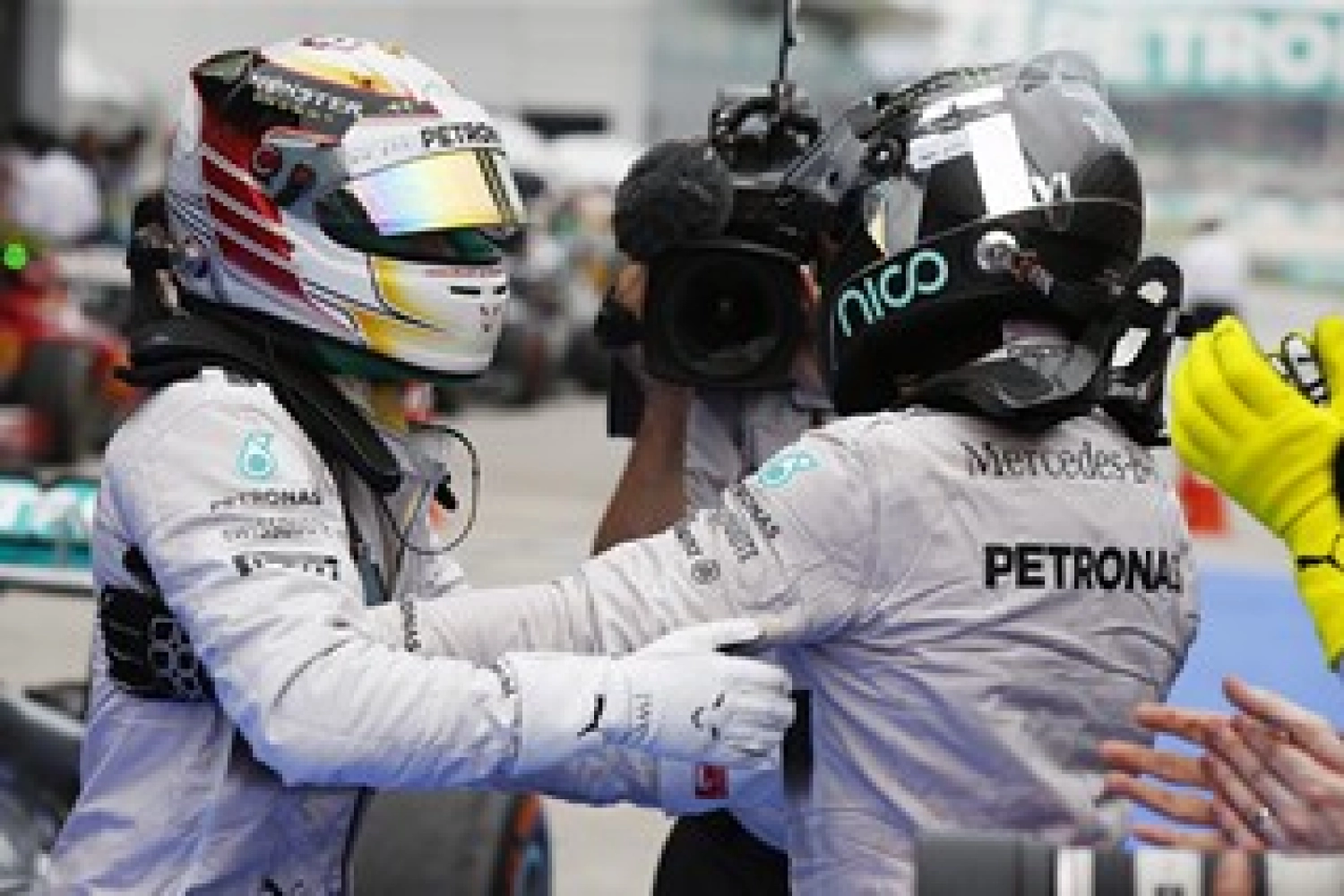
The Canadian Grand Prix, the seventh race of the season, is the first race of 2014 that eludes the Mercedes team due to an MGU-K problem (which recovers kinetic energy during braking to release it as power) that affected both cars almost simultaneously. This was an opportunity for Toto Wolff, interviewed by James Allen, to reflect on this challenging weekend for the star brand, as well as to discuss the relationship between its two drivers.
“You get used to victory very quickly.”
With six victories in six races, including five one-twos, the Mercedes team seemed capable of making it seven in Montreal. “You get used to winning very quickly,” explains Toto Wolff. “It’s almost become normal to win the race or to get a one-two, but what happened to us in Canada made us realize that we won’t always win. There will always be a race that we won’t win or where we won’t finish 1 and 2 due to external circumstances, accidents, or reliability issues.”
And this race, for the first time this year, it was during the Canadian Grand Prix: « The thought we had instantly on Sunday was that we were going to immediately lose both cars. It was a shock. » Indeed, halfway through the race, exactly, the Silver Arrows, comfortably in the lead, were struck by the same problem: « We got the message from Lewis on the radio saying he had no more power, and 20 seconds later, we got the same message from Nico. That’s when you realize that we could have lost both cars at the same time. It hadn’t crossed my mind before last week… Not to mention the idea that they could crash in the first corner. It was a good wake-up call for us. »
Wolff wants a “subtle war” between Hamilton and Rosberg
The start of the race was marked by Lewis Hamilton’s attack at the first corner, having gotten off to a better start, countered by Nico Rosberg with a defense that forced the Briton to put two wheels on the grass to avoid a collision. When asked if the two Mercedes drivers are at war, Wolff does not dodge the question: « There is always a war between drivers because you have to beat your teammate: he is the one who stands between you and a successful career. If your teammate beats you, your market value decreases. »
Despite everything, he distinguishes total war from subtle war: You can have a war that is detrimental to the team, one where the drivers clash, don’t talk to each other, damage the team spirit, harm the brand because they act arrogantly in the media… Or, it can be a very subtle war, where they just want to fight each other and gain the slightest advantage over the entire weekend. What we see, what the media sees, is a spectacle.
Hamilton and Rosberg “are not friends”
The Austrian technician believes that the two men are simply colleagues and that their primary goal is to be champions at the end of the season: « They are not friends and I think they never have been. Lewis and Nico are colleagues. They try to learn from each other, to motivate each other, but their number one priority is to beat their teammate. »
Moreover, he harbors no illusions about the real objective of the drivers: « We can say that the team comes first, that we need to win the constructors’ championship again and again, and the drivers will say that the team comes first, but the truth is they don’t care. It’s about winning the drivers’ championship, and that’s where we need to manage them properly by reminding them what is important to us. But it’s not always simple. »
« Lewis and Nico have very different personalities. They have a shared past, having raced in karting on the same team and spent holidays together as children, but they were very competitive from the start and, in terms of personality, they are very different. They need different “life settings” to function well, » he declares.
More precisely? « Nico needs a structured life, he is very precise with his schedule and very diligent when he acts. His whole life is very structured. Lewis is a driving genius who has raised his performance level because he has improved his professionalism and approach. However, what he needs to function well is to feel comfortable in his life, and he feels comfortable traveling, being interested in his activities and many aspects of his life that are different from F1. »
In response to the question of whether not being fully focused on F1 is a risk for Hamilton, Wolff disagrees: « It’s not to the detriment of his work as a driver; Lewis doesn’t party or drink; he is very precise and knows what he wants. The Lewis you see on the track today is completely different from what he was before. During the weekend, there is no more noise or people around him. »
« It was his decision. We spent time talking to him and asking if it was good for him to have so many people around him as well as the dogs… He needs to understand what is good for him. At a certain point in his life, it was good for him, » he assures.
A “constant” reflection on the relevance of team directives
Then comes the question everyone has asked or is still asking: will the two men always be free to fight? « It’s very difficult because we let them fight unless it’s a detrimental battle. We share the data, and they must be transparent with each other. There can be no low blows. What happened a few years ago [in 2007, ed.] with Lewis and Fernando [Alonso] at McLaren is unacceptable in our team and should not happen; there would be serious consequences if it did. »
« However, they are always trying to find that little advantage to beat the other, so now we let them fight, but there might be a time in the season where we will say we can’t do this anymore. » Wolff then seems to imply that the problems encountered in Montreal may result from this struggle: « We let them fight in Canada, where we lost one car and the second almost retired, and we still don’t know 100% for what reason. »
« So, if we realize that the fight at the highest level is detrimental to our campaign, it might well be that we backtrack. But it’s a constantly evolving dynamic that we analyze every week. It is not a generic principle to let them fight or to have team orders, it’s something we constantly think about, » he concluded.