Towards a Ban on Interconnected Suspensions in F1?
The interconnected suspension system (FRIC) could be banned in Formula 1 as early as the German Grand Prix. Such a decision would be a significant blow for a number of teams, including Mercedes.

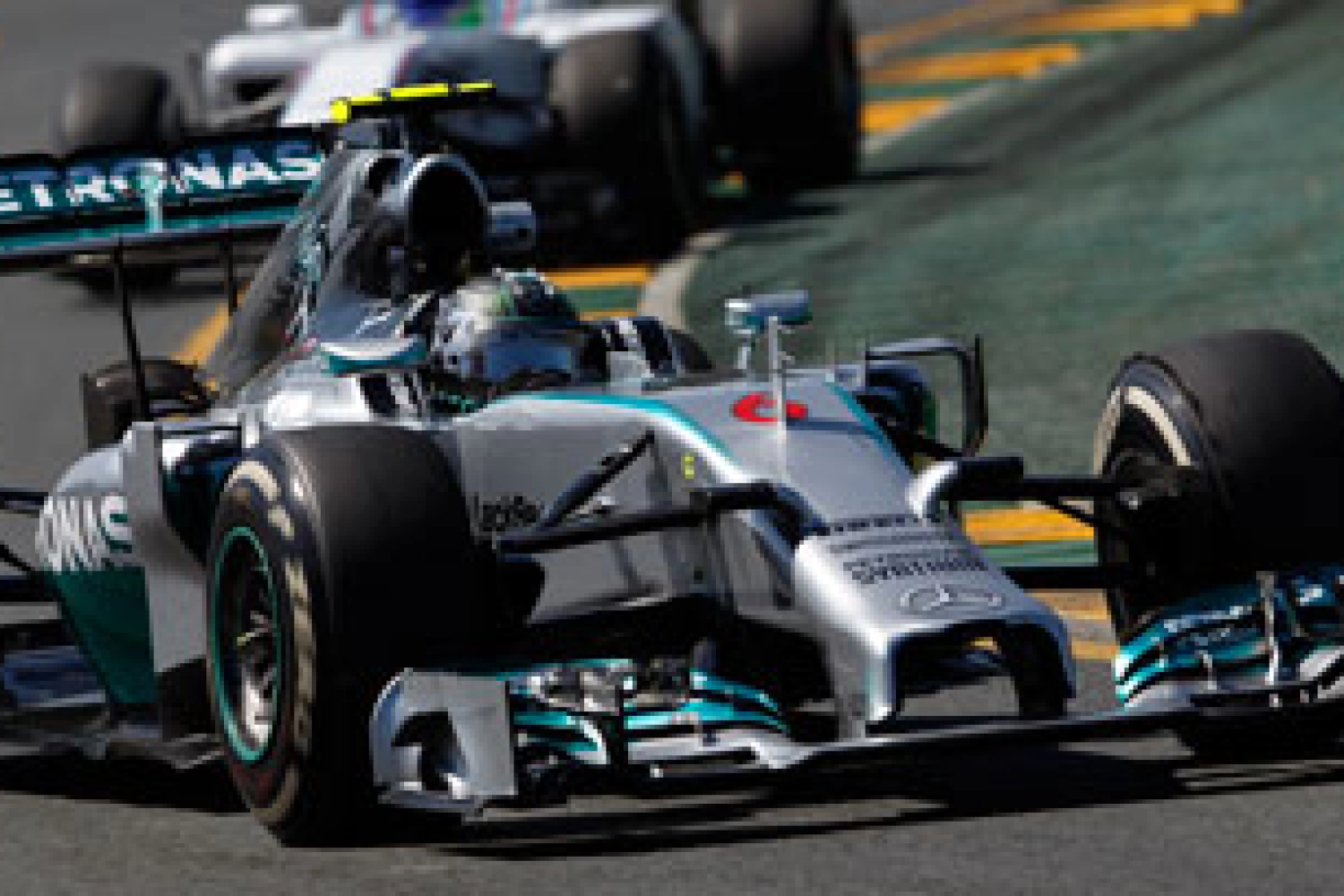
Autosport reveals that the FIA has reportedly warned Formula 1 teams, by letter, a few days before the German Grand Prix, that the front and rear interconnected suspension system (FRIC in English) would be illegal and could thus be banned.
This device, by linking the front and rear suspensions, maintains a constant ride height to improve the overall performance of the single-seater. It is, however, a completely passive system (without electronics). It was introduced by Renault in 2008. Mercedes, among others, is said to have further perfected and complexified this concept for its W05 Hybrid, but it’s not the only team to be equipped with it. Thus, Craig Scarborough, a British F1 technical expert, explained last April that practically all the teams now have these interconnected suspensions.
The letter, sent this Tuesday by the governing bodies of the discipline to the teams, indicates that this system would be in contradiction with the technical regulations, specifically article 3.15, related to movable aerodynamic devices. Thus, any part of the car that influences aerodynamics and is not « rigidly fixed » to the entire part of the car resting on the suspension is prohibited. The term « rigidly » means that this part must have no degree of freedom.
A unanimous vote by the teams to postpone the ban?
However, the question of postponing this ban in 2015 arises, and the International Federation seems, according to Autosport, to be open to such a schedule. Indeed, even though the season includes numerous test days due to the introduction of unprecedented hybrid turbo technology, banning FRIC would force teams to completely rethink their approach. Their cars have been designed with this system in mind.
A vote was reportedly proposed to the teams on this issue. However, for a postponement to be accepted, it would require the unanimity of the teams. A situation that seems hardly conceivable, but nothing today allows us to assert what the choice of each will be, especially if the ban is so sudden.
Charlie Whiting, the FIA delegate, clearly indicated that in the absence of a unanimous vote to postpone this ban to 2015, any team that uses this system at the next Grand Prix in Hockenheim will face a penalty imposed by the stewards.
A few months ago, the question of the return of active suspensions in Formula 1 – an electronically assisted system – was raised for 2017. One of the arguments put forward was that current suspensions – mechanically adjusted – represent a significant expense, both in terms of time and money, which could be easily reduced by switching to electronically managed suspensions.