2014 German Grand Prix F1: Strategy Summary
After the German F1 Grand Prix, won by Nico Rosberg, ahead of Valtteri Bottas and Lewis Hamilton, find the analysis of the tire strategy.

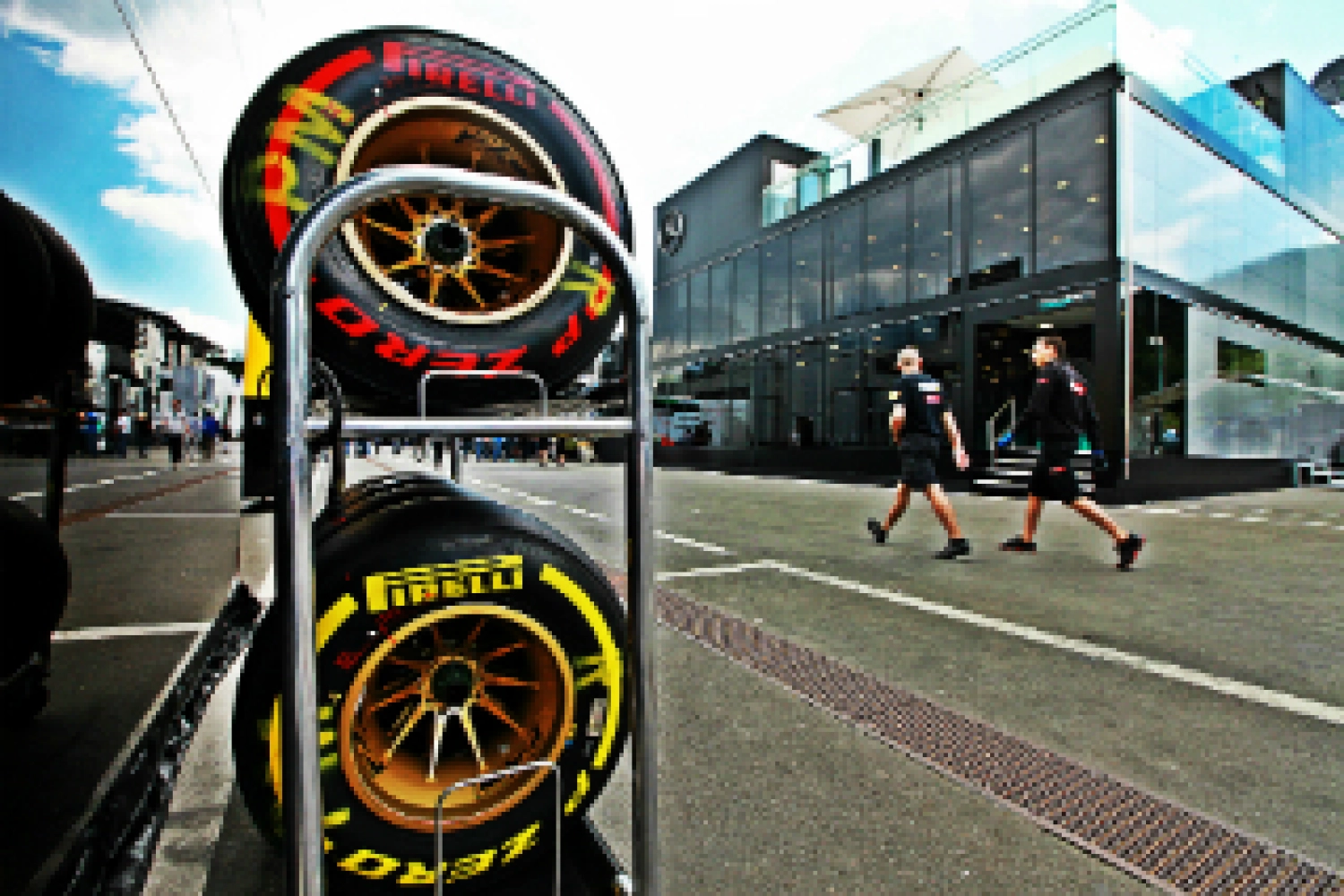
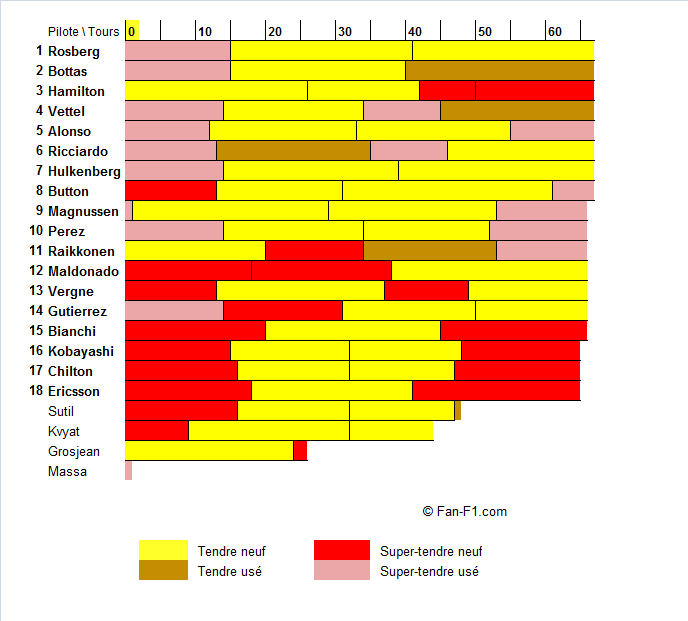
Pirelli predicted, before the race, that the ideal strategy would be two stops, with the first two stints on super-soft tires and the last stint on soft tires. In reality, of the 18 drivers who finished, only one used this precise strategy. Moreover, the race was largely dominated by three-stop strategies.
2 stops
Six drivers used a two-stop strategy, which seemed to be the preferred strategy according to Pirelli. Among them were the Grand Prix winner, Nico Rosberg, and his runner-up, Valtteri Bottas. Another member of the top 10 who stopped twice was Nico Hülkenberg. The three other drivers who made this choice were Pastor Maldonado, Jules Bianchi, and Marcus Ericsson.
The top 10 contenders all chose a “conservative” strategy by doing the last two stints on softer tires that were slower but more durable. It was a logical choice for Rosberg and Bottas, as tire performance was ultimately more important than pace, with the former being in a league of his own and the latter successfully holding off Hamilton at the end of the race.
Outside of the top 10, however, the strategies were more aggressive: for instance, Maldonado, following Pirelli’s ideal strategy to the letter, started with two stints on super-soft tires. Meanwhile, Bianchi, also a bit alone in the world, started and finished on super-soft tires, just like Ericsson.
3 stops
Therefore, 12 drivers opted for three tire changes, either from the start or during the event. Among them were seven members of the top 10, including Lewis Hamilton, who chose an aggressive strategy to climb through the pack and an ultra-aggressive strategy at the end of the race to try to overtake Bottas.
The strategies are quite diverse: Vettel, Ricciardo, Vergne (ST / T / ST / T) and Räikkönen (T / ST / T / ST) alternated the compounds used. The last two were rather affected by external factors, which prevented them from finishing in the points.
Others chose (or were forced) to start and finish the Grand Prix with the softest compounds: this was the case for Alonso, Button, Magnussen, Perez, Kobayashi, and Chilton. It’s really only for the Spaniard that such a strategy – aiming to be aggressive during the final stint – paid off, as he was able to get the better of a Ricciardo on much more worn soft tires.
Gutierrez, finally, chose the opposite strategy to Hamilton, starting the race with two stints on super-soft tires and finishing with two stints on soft tires; without much success.